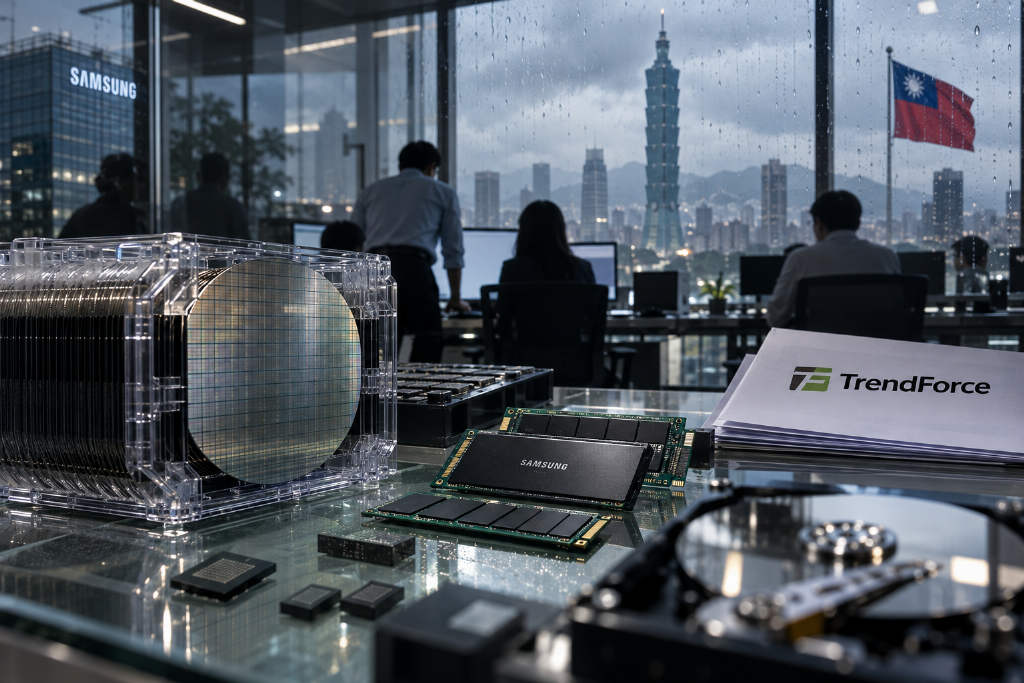
TrendForce2026-10-06 04:58:05TrendForce says DRAM shortage is spilling into enterprise SSDs, with ABF substrate prices seen rising as much as 15% a quarterTrendForce said in its latest supply chain weekly report that tight memory supply is no longer confined to DRAM and is now affecting NAND-based enterprise SSDs as well. The firm said DRAM lead times have stretched to 20 weeks, far above the 8-week level it considers balanced, while enterprise SSD lead times have reached 16 weeks. It expects the eSSD market to remain undersupplied throughout 2026. The report also identified ABF substrates and HDDs as the most strained parts of the supply chain when measured against normal lead times. ABF substrate lead times were put at 48 to 56 weeks, or roughly 4 to 4.7 times the balanced level, and TrendForce said prices are likely to rise 10% to 15% per quarter from the third quarter of 2026 through the fourth quarter of 2027. HDD lead times were listed at 50 weeks, with improvement not expected until after the end of 2027. Elsewhere, TrendForce said CPU demand is being supported by AI inference workloads, while GPU supply was described as balanced despite lead times of 30 to 40 weeks. The market is also watching Micron’s recent results, Samsung Electronics’ preliminary third-quarter earnings due on Oct. 8, and minutes from the Federal Reserve’s Sept. 15-16 FOMC meeting scheduled for release on Oct. 7 Eastern Time.180
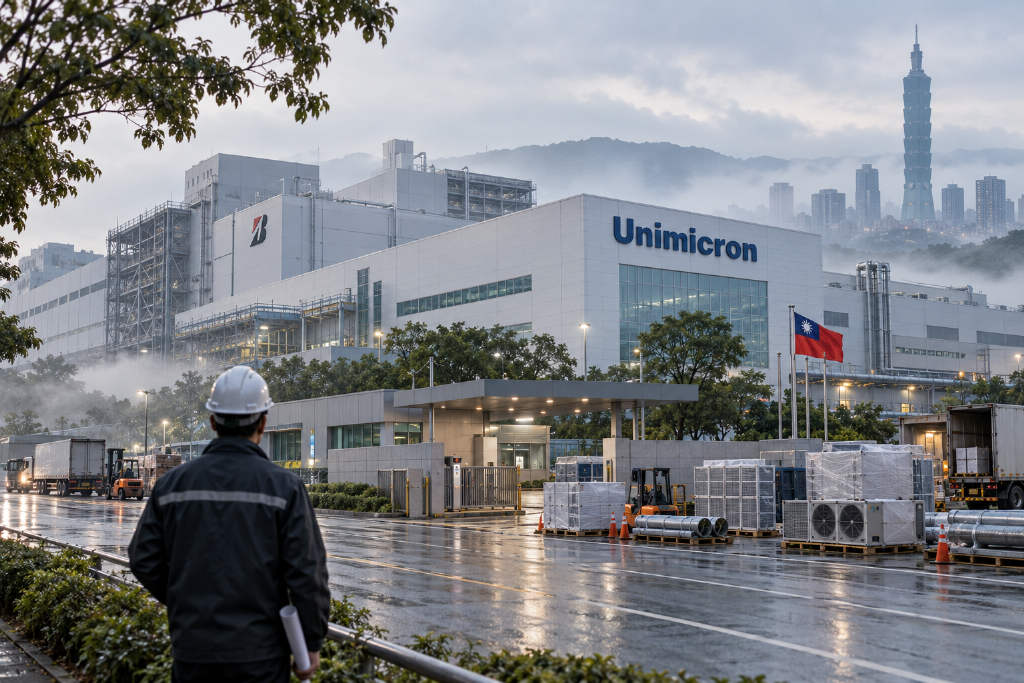
Unimicron2026-10-01 00:09:42Unimicron buys Hsinchu Hukou plant site for NT$10.088 billion to expand high-end substrate capacityUnimicron Electronics (3037) has acquired a factory and land owned by Bridgestone Taiwan in Hsinchu County’s Hukou Industrial District through a bidding process for NT$10.088 billion. The deal covers about 19,072 ping of land and 17,601 ping of buildings. The transaction price came in above the appraisers’ valuation range of NT$8.424 billion to NT$8.856 billion, implying a premium of about 14% to 19.7%. The company said the purchase was aimed at meeting future customer demand for expanded high-end substrate capacity and supporting its medium- to long-term production planning. The report said securing an existing factory and office complex could shorten construction timelines, while also highlighting the scarcity of large-scale industrial land parcels in northern Taiwan. According to the source article, the expansion is tied to demand for high-end substrates used in AI servers, high-performance computing chips and data centers. The piece also noted that the transaction will lift Unimicron’s annual capital expenditure, with additional spending on clean rooms and front-end equipment expected to push the site’s total funding needs into the hundreds of billions of New Taiwan dollars.610
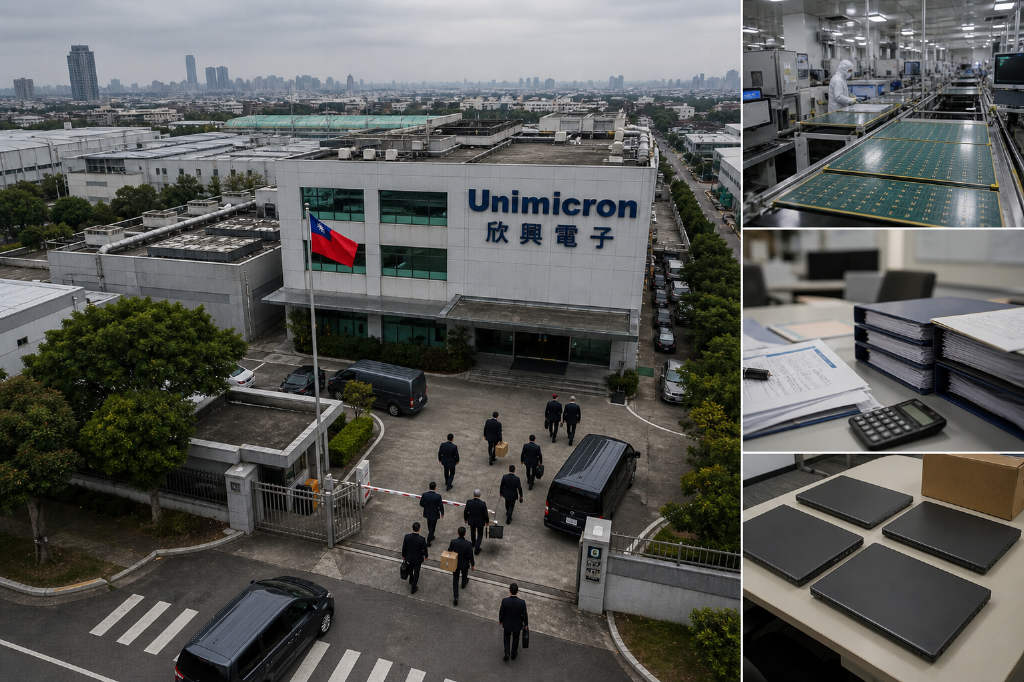
Unimicron2026-08-28 10:03:01Unimicron shares retreat after search as market rumors point to accounting and origin-labeling probeUnimicron Electronics, the ABF substrate maker traded in Taiwan under ticker 3037, was searched on Aug. 28 at its Zhongli Hejiang plant under a probe led by the Taoyuan District Prosecutors Office and carried out by investigators, according to a report by Economic Daily News cited by ABMedia. Two vice presidents and one accountant were taken in, and four laptops were seized. The company said it would fully cooperate with investigators to clarify the case and added that its operations were not affected. At the same time, market speculation spread around possible false accounting, insider trading, and so-called origin laundering involving products made in mainland China and relabeled in Taiwan for export. Prosecutors have not confirmed those claims, saying only that the case remains under investigation and that they cannot comment on whether it involves breach of trust, asset stripping, insider trading, or money laundering. Unimicron’s stock had hit an intraday record high of TWD 1,230 before falling to TWD 1,110 by the close, down 5.93%. The move drew added attention because several active ETFs hold the stock, often among their top 10 positions, leaving the market focused on how fund managers may adjust those holdings on Monday.1250
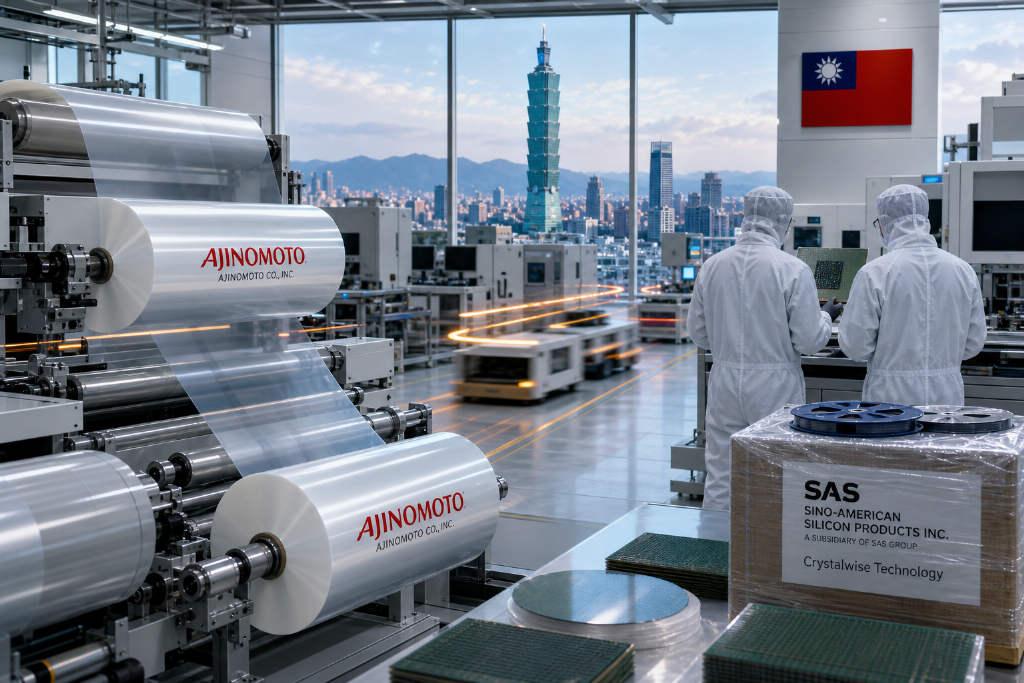
AI servers2026-08-21 04:47:03Ajinomoto cuts ABF build-up film supply to some customers, putting SAS Group in focus for order diversionAjinomoto, which the report says controls more than 90% of the global ABF build-up film market, is facing tight capacity as AI server demand pushes up the need for FC-BGA substrate materials. Its monthly output has exceeded 2 million square meters, but production lines were already close to full utilization in the second quarter of this year. Against that backdrop, the Japanese supplier has reportedly moved to selective shipments, prioritizing domestic Japanese customers and core overseas accounts. Some Chinese manufacturers were notified that supply could be reduced by about 30%. The development has drawn attention to Taiwan-based Sino-American Silicon Products Inc. (5483) and its subsidiary Crystalwise Technology. Crystalwise, founded in 2015 and brought under the group at the end of 2024, is described in the source report as Taiwan’s first local maker to complete in-house R&D and mass production of insulating build-up film. SAS currently holds about 50.8% of the company. With products already certified by multiple customers in Taiwan and overseas and now in small-volume shipments, Crystalwise is seen as a potential second-source supplier if substrate makers accelerate supply diversification.1810
TSMC2026-08-12 03:47:27TSMC says 5.5x reticle CoWoS is in mass production, flags ABF substrates as next constraintTaiwan Semiconductor Manufacturing Co. said its 5.5x reticle-size CoWoS packaging has entered mass production, with yields holding above 98% and some products topping 99%, according to comments made publicly on Aug. 11 by Vice President of Advanced Packaging Ho Chyun. He said the company aims to scale CoWoS to 14x reticle size by 2029, while also pushing SoIC hybrid bonding from a 6-micron pitch already in production to 4.5 microns by the same year. Ho said TSMC’s CoWoS capacity has nearly doubled every year over the past three years and that the company now operates 10 advanced packaging fabs globally. Supply is now much closer to customer demand, he said, though it still has not fully caught up. He also pointed to a new supply-chain strain for AI hardware. After memory, ABF substrates are likely to become the next major bottleneck, he said. In his view, multisourcing does not fully solve the problem because substrate differences across suppliers can complicate coplanarity control and hurt yields during system integration. Ho also called for broader industry coordination through the Open Compute Project to build system-level validation standards and speed AI product development and ramp-up.1750